Knowledge, verification and value: what we learned at legal tech events in 2026
By Abbey Caller - Associate Product Manager - Oct 28, 2026
Between July and October 2026, I had the privilege of attending three major legal technology events across Australia and the United Kingdom:
- Legaltech Hub Horizons Sydney, hosted by LegalTech Hub on 30 July 2026;
- The 20th Lawtech Summit & Awards Gold Coast, hosted by Chilli IQ on 17 and 18 September 2026; and
- Legal Geek in London on 14 and 15 October 2026.
Each event brought distinct perspectives, panel insights, and market analysis. Yet, the core themes echoed what my colleagues heard at ILTACON in August. Across four events and three continents, law firms are grappling with the exact same strategic questions: What makes AI genuinely useful? Who checks its work? How do we train the next generation of lawyers? And how will the billable hour evolve?
In this article, I'll bring together the key themes and insights from each event, and over the coming weeks, we’ll explore each theme in greater depth through a multi-part series, unpacking the challenges, opportunities and practical implications for law firms and legal professionals:
- Why knowledge and context have become the real advantage;
- The shift from producing legal work to verifying it and the ramifications for the legal apprenticeship model;
- Lawyers as builders: balancing governance and innovation;
- The economics of AI: proof of value, token costs, and the billable hour; and,
- Why the human skills matter more than ever.
Let's get into it.
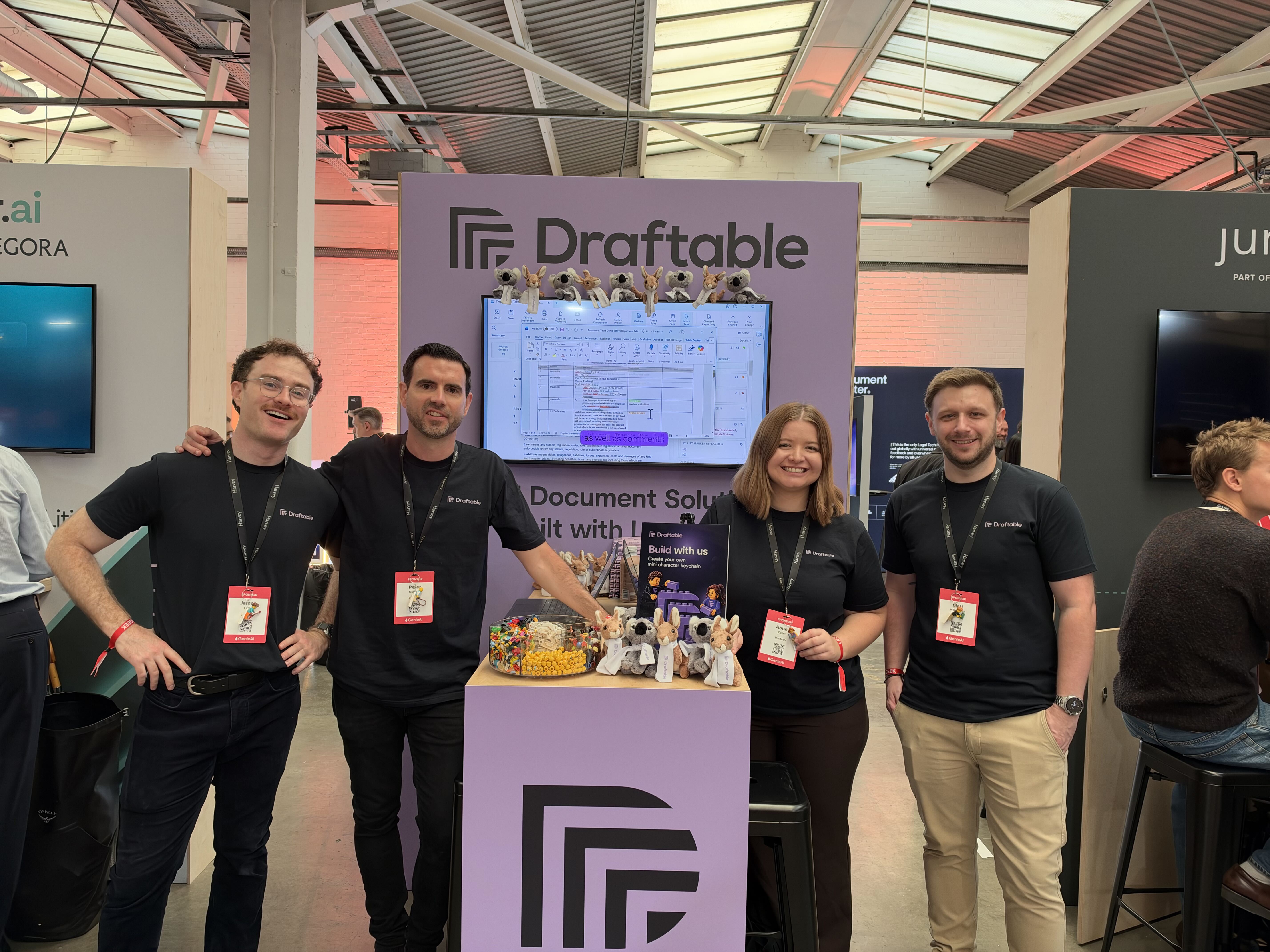
The Draftable team at Legal Geek 2026
Knowledge and context are the real advantage
A quote from Hayley Harris (Pinsent Masons) during Legal Geek’s Beyond KM Systems session really stuck with me: “Knowledge has become fashionable again.” Legal Technology, and Legal AI specifically, have pushed knowledge management to the forefront, with clients increasingly recognising that a firm’s proprietary Intellectual Property (IP) and internal know-how are what make AI tools produce unequivocal value.
As Emily Tearle (Travers Smith), Caroline Doherty de Novoa (Freshfields), and Amanda Thomas (A&O Shearman) noted at Legal Geek, client conversations have evolved. Clients are no longer just asking whether a firm uses AI. They ask how it's used, what knowledge layer sits behind the tools, and how the firm can build with the client. Some clients want to have help building their own knowledge management processes, because they want to own their IP too.
This same sentiment echoed across Australia, framed as context:
- Context drives accuracy: At the Lawtech Summit on the Gold Coast, Colleen Baehrend emphasised that we as humans are great at acting with context, and context represents the relationship between data points. Metadata allows AI to read, categorise, and accurately parse files, prompting another speaker to call metadata "the cheapest forensic instrument a firm owns."
- Agentic outcomes rely on context: In Sydney, Michael Altit joined Gareth Cantin (Clayton Utz) in highlighting that even the most tech-forward firms depend on accurate internal knowledge and authoritative external sources (like Lexis and Westlaw) to inform AI agents.
- Knowledge as executable assets: Panellists on the Gold Coast discussed shifting from passively sharing institutional knowledge to embedding it into repeatable, AI-enabled workflows as the underlying models evolve.
ILTACON showed where this is heading. With almost every firm now using Copilot and a legal AI platform, the conversation has moved away from simple adoption of these tools and shifted to the return on investment (ROI). The ROI can depend on how the firm, and their lawyers engage with context engineering: helping AI understand how a firm, its teams and its lawyers’ work.
However, context cuts both ways. The very metadata that empowers AI to understand a document can inadvertently expose a firm if sensitive details leave the building. (This balance between context and security is why we collaborated directly with law firms when developing Draftable Clean.)
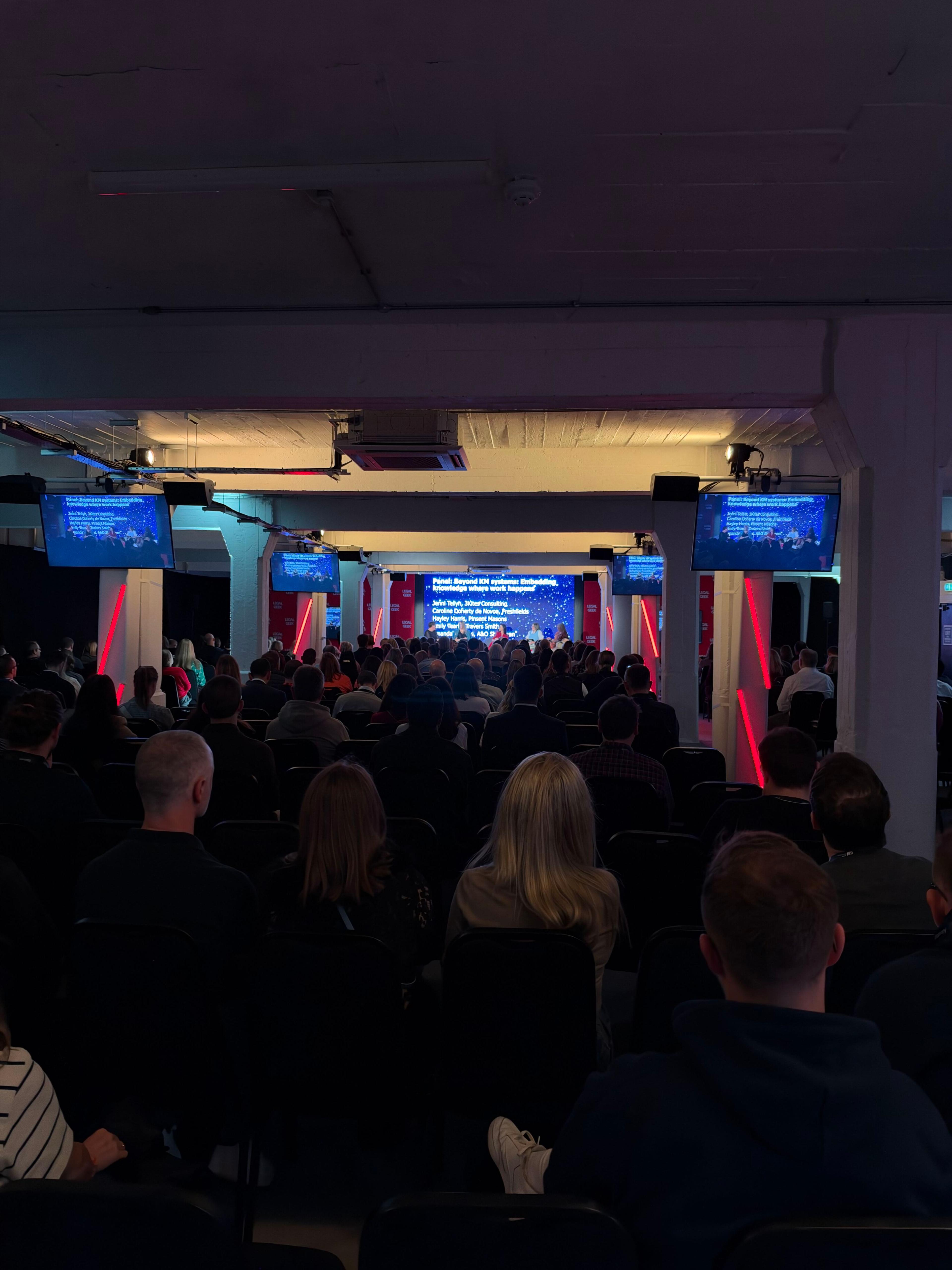
Beyond KM Systems panel at Legal Geek 2026
From producing legal work to verifying it: the ramifications to the legal apprenticeship model
As a recent law graduate, the single most compelling topic discussed was the functional shift in a lawyer's daily role: moving from producing legal work to reviewing and verifying output generated by tech tools.
The verification paradox
While AI speeds up initial drafting, Dr. Kelly Nuttall (Future Secure AI) and Ziggy Chen highlighted the emergence of the verification paradox: checking complex AI output can sometimes take as long as drafting from scratch. In an industry where accuracy is non-negotiable, verification requires deep expertise to spot subtle hallucinations, challenge underlying assumptions, and catch missed nuances.
The same theme emerged at ILTACON, where several firms our team spoke to had visited major AI labs ahead of the conference to better understand which repeatable legal tasks AI can reliably perform and where its limitations lie. This echoed a point made by Kali Astill (Ashurst) at the Lawtech Summit, who highlighted the importance of vendors being transparent about what their tools can't do, so firms can effectively manage the risks. Across both events, the message was clear: AI will augment rather than replace lawyers, because regardless of the technology involved, clients still expect certainty, accountability and someone to stand behind the work.
It's also why one question came up at every event. Our team at ILTACON heard nearly every smaller vendor being asked about it, and I heard it repeatedly at our stands across other events: "What if I can do what you do with AI?" It's a fair question, and one we have tested at Draftable. Our answer reflects how specialised technology functions differently than generative models. When lawyers require 100% certainty that every edit or deletion is caught, deterministic tools deliver reliable, consistent redlines instantly, which in turn solves the verification bottleneck rather than creating a new review task.
Rethinking the apprenticeship model
The rise of automated work directly impacts how junior lawyers build the judgment required to verify documents in the first place:
- Collapsing the traditional ladder: In Sydney, Nick Abrahams described the breakdown of the historical legal apprenticeship model. Routine tasks like due diligence and discovery, which historically served as primary training grounds for junior lawyers, are increasingly automated.
- Cannibalised training: As Nick noted, we’ve handed the foundational tasks juniors used to learn on over to AI, yet we still expect them to develop the judgment needed to review complex output. As one vendor on the Gold Coast put it, we’ve automated the teaching but kept the exams.
- Practical solutions: Kate Booth (MinterEllison) noted that replacing repetitive tasks opens doors for simulation-driven learning. Meanwhile, at Legal Geek, Emily Tearle (Travers Smith) outlined how her firm is pivoting from static seminars to interactive workshops, supported by structured AI academies and open knowledge sharing between supervisors and juniors.
As AI changes the work lawyers do, firms are rethinking how that work is verified and how lawyers develop the judgement to verify it. The opportunity is to move beyond learning through repetition towards more deliberate training that prepares junior lawyers for a different kind of legal practice than that which was engaged with when the legal apprenticeship model was built.
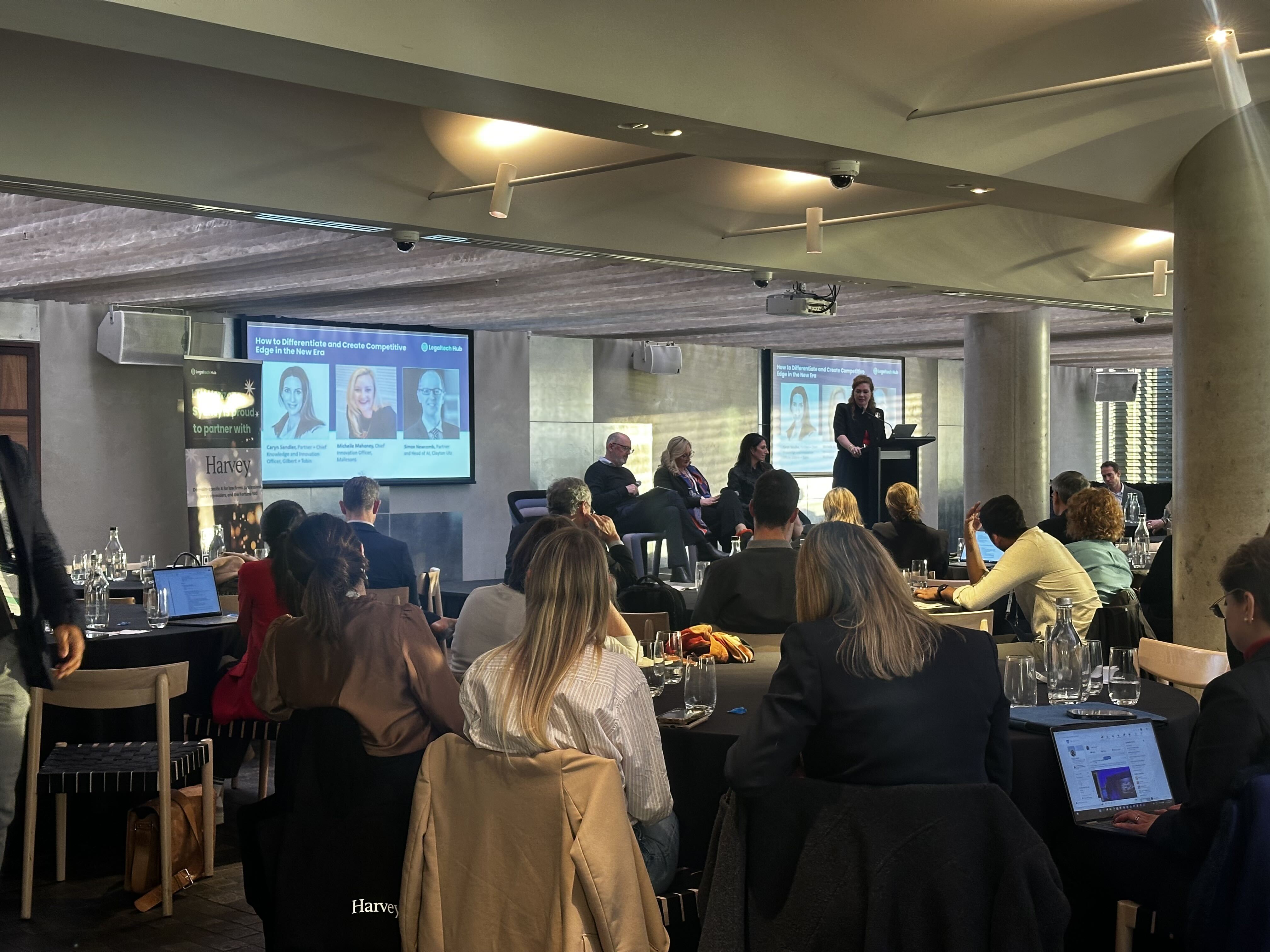
Panel discussion at LawTech Summit on the Gold Coast
Lawyers as builders: balancing innovation with governance
As low-code platforms and AI tools become accessible, lawyers are increasingly building custom technical solutions to solve every day operational friction. This trend raises a critical question: How do firms encourage grassroots innovation while maintaining strict security, compliance, and governance?
- Vibe coding vs. safe sandboxing: At Sydney’s Big Tech and Vibe Coding panel, Raymond Sun (founder of LegalQuants) highlighted how hundreds of lawyers are coding to transform service delivery. However, panellists cautioned against building unmonitored tools without technical oversight. Suggestions included restricting development to approved enterprise stacks (like Microsoft Power Platform) or establishing sandboxed environments using dummy data.
- Dedicated legal tech practices: In London, Karen Jacks shared how Bird & Bird established a dedicated legal tech division within IT to support and govern lawyer-led tech ideas, reflecting a broader industry trend toward formal innovation roles.
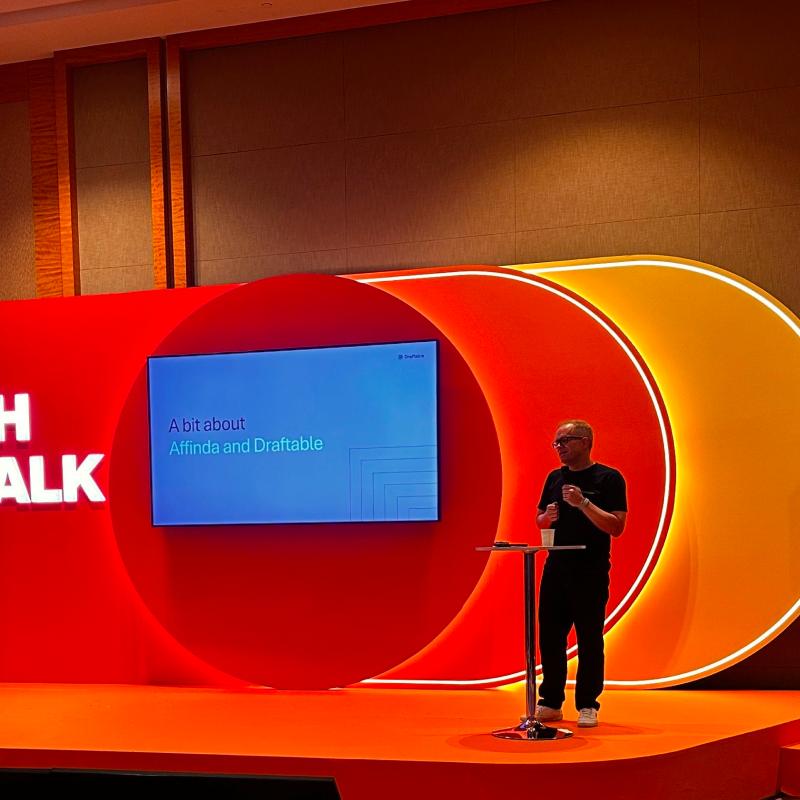
- Open-source opportunities: On the Gold Coast, Draftable’s GM, Caspar Roxburgh, presented research the exponential growth in open-source legal AI tools and how firms can safely integrate them (explore our open-source inventory here).
- Evolving privacy obligations: Lisa Fitzgerald (Norton Rose Fulbright) asserted that technical innovation carries privacy risks, particularly under regulatory developments like Australia’s statutory tort for serious privacy invasions (enacted June 2025).
The message across conferences was that lawyers are becoming much more active participants in technology development, but firms are grappling with the responsibility to ensure that they do so safely.
Ultimately, innovation and governance must evolve in lockstep. The most successful firms will build clear frameworks that encourage responsible experimentation without exposing client data to unnecessary risk.
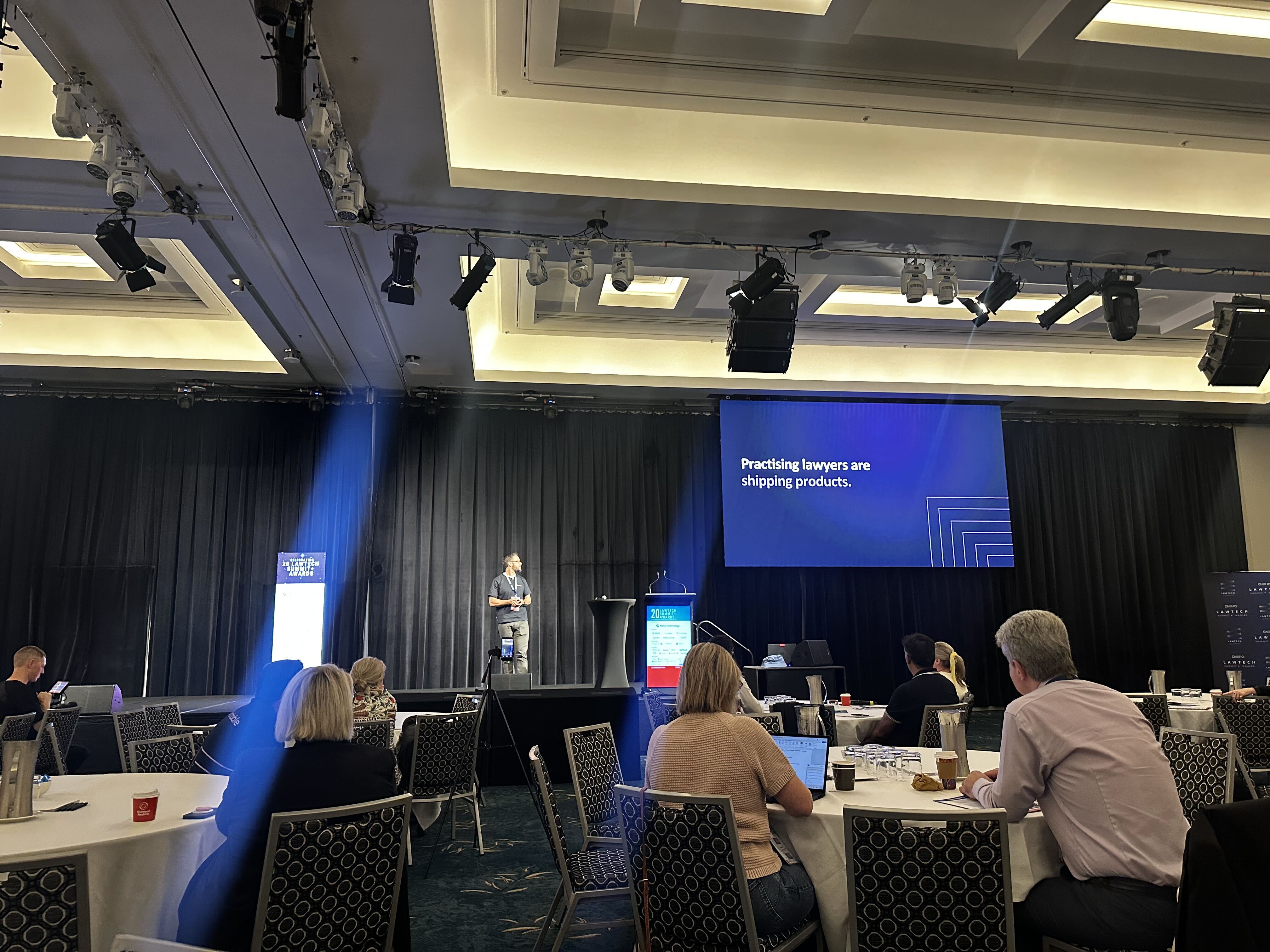
Caspar presenting on open-source legal tools at the Lawtech Summit on the Gold Coast
The economics of AI: proof of value, token costs, and the billable hour
Across all four cities, the economic narrative shifted decisively from what AI can do to what it costs, how value is measured, and how it impacts the legal business model.
Moving from proof of concept to proof of value
Firms are experiencing AI initiative fatigue. In London, an IT panel described a market crowded with products whose capabilities overlap, and each one takes considerable time and resources to evaluate, purchase, govern and adopt. Project teams at ILTACON noted they were stretched thin after three years of constant rollouts, making firm leaders far more selective.
Firms are also becoming more discerning. In the Gold Coast, IT leaders, including Kris Mason (Arnold Bloch Leibler), Peter Campbell (Allens), Ron Dutta (McCullough Robertson), and Gavin Wingfield (King & Wood), emphasised that firms now scrutinise security, audit capabilities, service levels, and data residency before purchasing. Furthermore, panels featuring Nikki Rollason (NRF), Alex Comyn (HSF Kramer), and Kali Astill (Ashurst) warned against unused tools, urging firms to prioritise actual active adoption over total license counts.
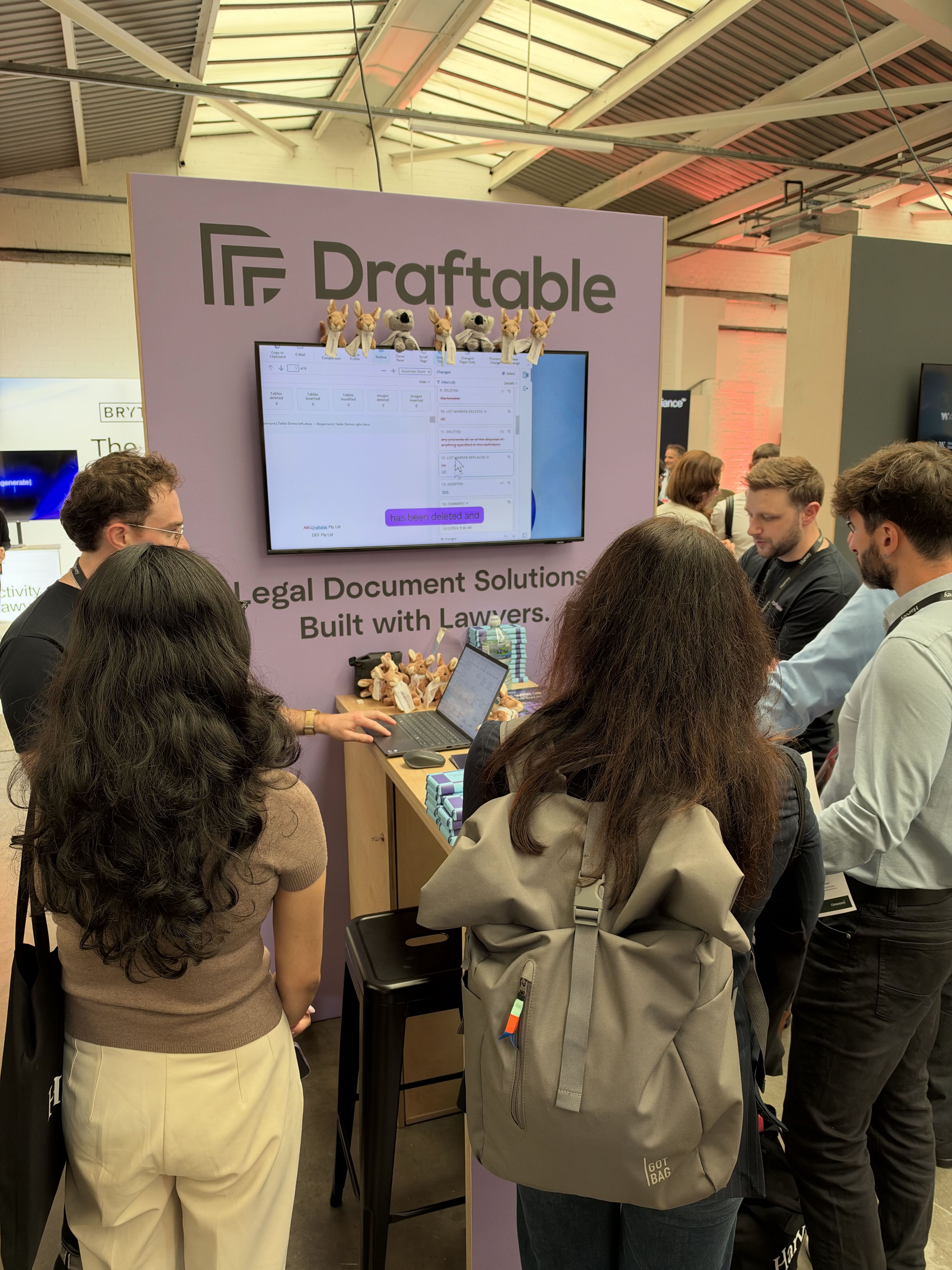
Draftable team mid-demo at LegalGeek stand in London
Changing cost models & token economics
Proving value is becoming more complex as initial vendor subsidies taper off:
- Consumption-based pricing: Colleen Baehrend highlighted pricing models shifting and pointed to the move towards consumption-based pricing, where every query and retry adds to the bill. One attendee likened this to a taxi meter that discourages the open exploration that good legal analysis requires.
- Cost control: The technology leaders panel noted that many firms struggle to forecast their AI spend because token and prompt usage is hard to predict. Similar themes came up at ILTACON in Nashville, where Harvey announced it had post-trained its own model ‘Tenet’ and Thomson Reuters released its own legal AI model ‘Thomson’ post trained on Qwen. Both vendors framed these decisions around improved performance, but many attendees saw them as ways to cut the cost of serving customers as pricing moves to usage-based models.
Proving value will take more than demonstrating time savings or technical capability. Firms will need to understand the ongoing cost of AI, how it compares to the value delivered, and whether the economics hold up as adoption scales. One area I have found particularly interesting is how this measurement of value to firms will impact the billable hour.
Rethinking the billable hour as a result
The economic implications of AI for law firms extends beyond technology budgets. As AI changes how legal work is performed, it also raises questions about how firms price their services, structure their teams and generate revenue.
In one of the most talked-about sessions on the Gold Coast, Jenae Webb (HSF Kramer) argued that when time, value, and leverage decouple, the traditional law firm pyramid structure is called into question. Strong financial performance can mask the urgent need to rethink service pricing, shifting the focus from how many hours a matter takes to what mix of talent, technology, and process delivers the optimal outcome.
Similarly, Kerry Angel (Harbottle & Lewis) noted in London that clients are actively negotiating alternatives to billable hours for AI-assisted work or introducing explicit usage guidelines in engagement letters.
Of everything we heard across the three conferences, this is the area I’m most excited to dig into further. How AI reshapes the billable hour, the pyramid and the way firms create and capture value deserves more than a few paragraphs, so we’ll be sharing a more in-depth analysis in the coming weeks.
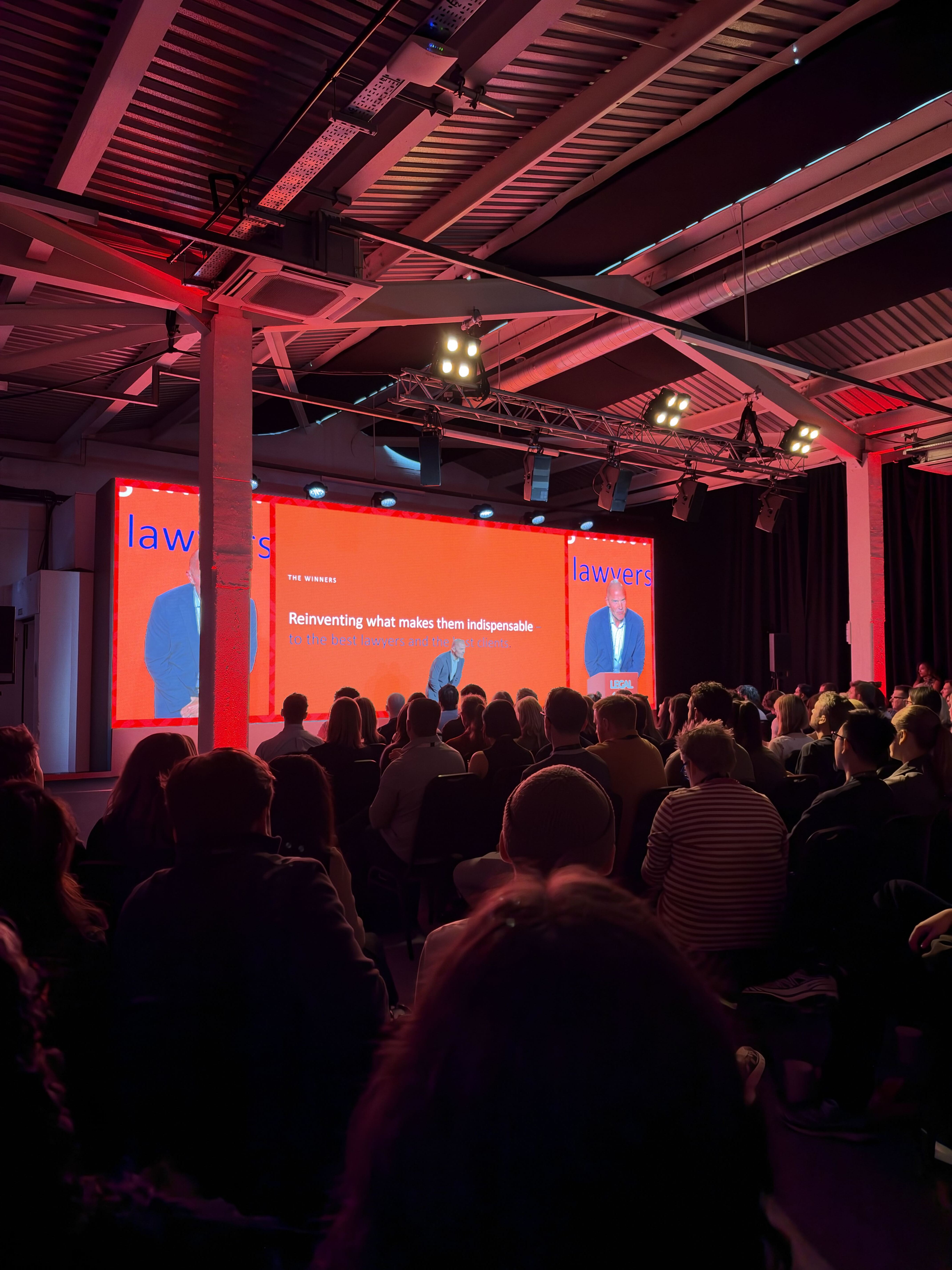
Legal Geek 2026, London
The human edge: preparation, curiosity and communication
Okay, now for my last point. If you have made it this far, I am impressed.
Some of the most memorable sessions across the conferences were not about AI, and had little to do with technology at all, but had everything to do with how good work gets done, entirely through human performance and interpersonal skills:
- Relentless preparation: Former Rugby World Cup referee Wayne Barnes (now partner at Squire Patton Boggs) shared how rigorous self-review and building a trusted "pit crew" transformed his career, challenging legal teams to systematically evaluate their client pitches and learn from outcomes.
- Vulnerability builds trust: Documentary maker Louis Theroux discussed how leading with curiosity and vulnerability builds deeper connection than projecting absolute certainty, a principle that mirrors how we approach product design alongside our partner firms.
- Core human differentiators: In Sydney, Nick Abrahams shared that when asking 100 General Counsels what matters most in external counsel, zero prioritised legal knowledge alone (which is assumed). Instead, they cited clear communication, adaptability, business curiosity, and emotional intelligence.
The thread running through all of it: As AI automates routine processing, these innately human qualities of preparation, honesty and communication become a firm's strongest competitive moat.

Louis Theroux keynote at Legal Geek London
Where to from here? The next 12 months
The insights gathered across Sydney, Nashville, the Gold Coast, and London outline a clear trajectory for the legal sector over the coming year:
- Knowledge and context teams grow in influence: Firms will invest in curating, governing and enriching their own knowledge and metadata, because that's what makes AI useful and what clients are asking about.
- From production to verification and judgement. As lawyers shift from producing work to reviewing and validating it, firms will rethink junior training, using simulation, workshops and peer learning to build critical thinking and judgement in planning for this shift.
- More lawyers building, with guardrails: Sandboxes, testing standards and safe dummy data will allow vibe coding with AI to evolve into genuine tech incubation for law firms.
- Fewer vendors, greater scrutiny of value and cost: Firms will favour well-integrated tools that demonstrate clear ROI, transparent pricing, strong security and honest limitations, while closely measuring AI consumption costs against the value delivered.
Underpinning every discussion was a consistent theme: the firms that do well will be the ones that stay curious, prepare properly and are honest about what's working. That's true of the technology, and it's true of the people using it.
If you spoke to a team member at Draftable at one of our stands, thank you! If we missed you, we would love get in touch.
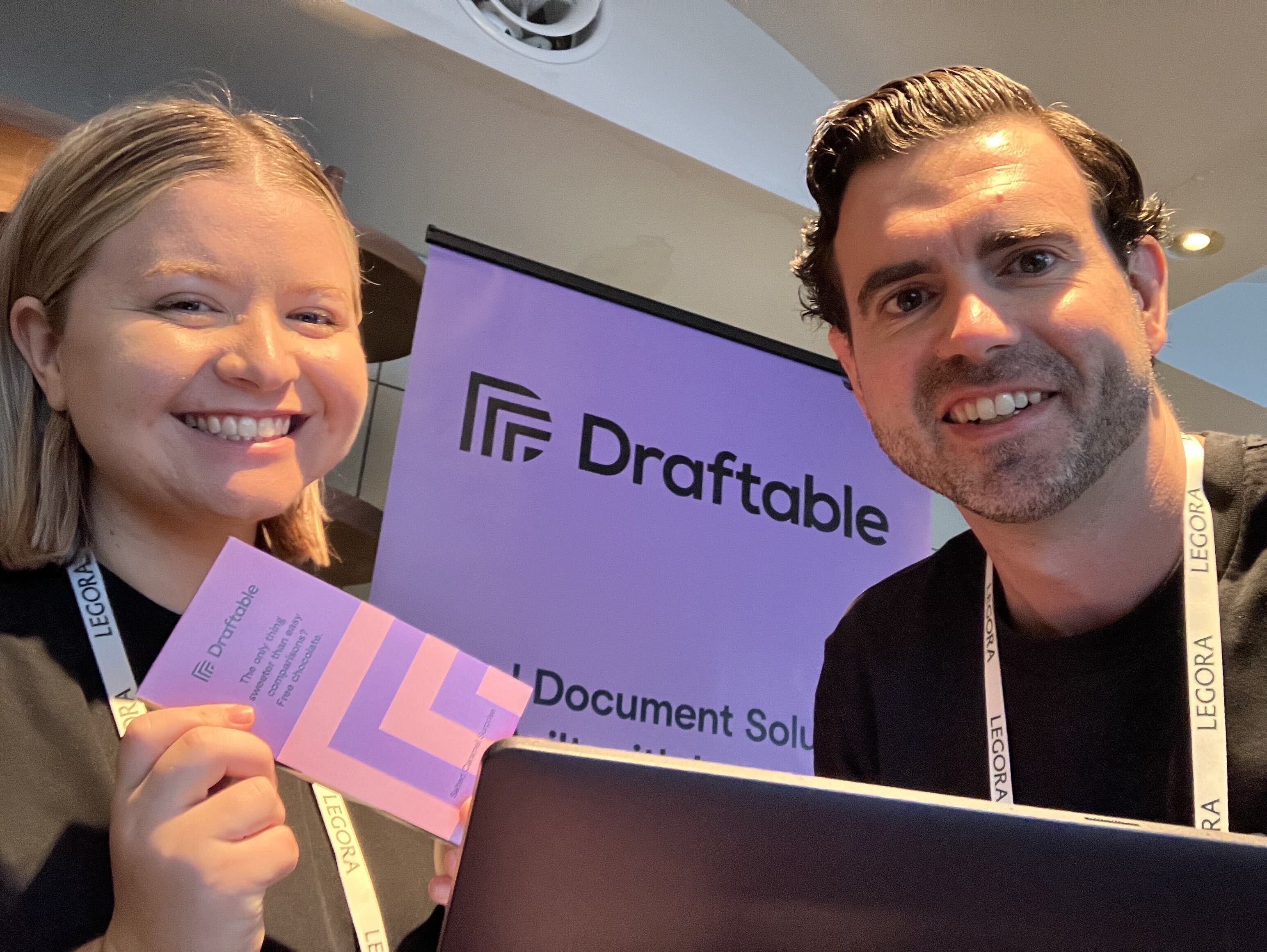
Abbey & Peter at LTH Horizons in Sydney